The Clock Still Sets the Price — But the Click Closes the Deal
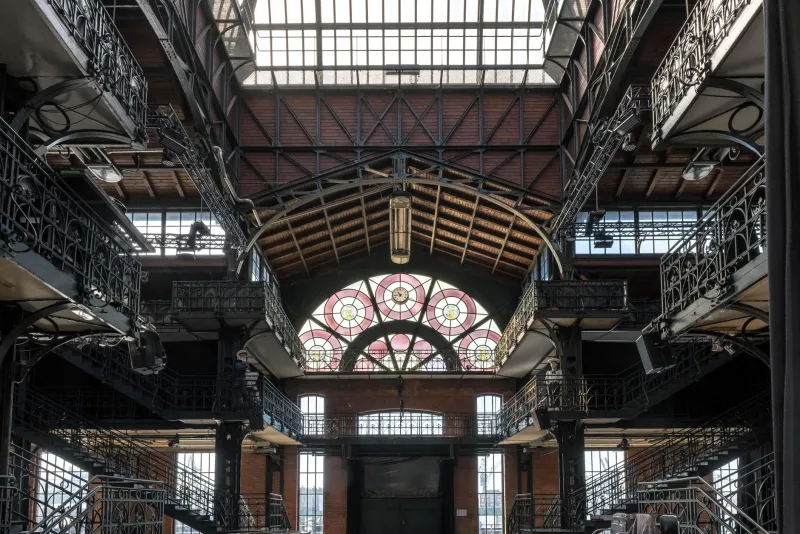
The Dutch auction clock is one of the great pieces of theatre in the flower trade. A buyer sits with a button, the price falls, and the room decides in seconds whether a lot is worth taking. For decades it has been the benchmark for price discovery in cut flowers, and for good reason. But in 2026, UK florists are buying in a different world: smaller orders, more frequent top-ups, more UK-grown seasonal lines, and a post-Brexit border that has made logistics a commercial skill rather than an afterthought.
So is the Dutch auction model still fit for UK florists? Yes — but not on its own. Our position is unambiguous: the clock still sets the price, but the click now closes the deal. The winning model for UK trade buyers in 2026 is hybrid, not purist.
The clock's enduring advantage: price discovery at speed
The clock does one thing better than any other format: it discovers price in public. Everyone sees the same descending price, everyone knows the market has cleared, and the transaction happens at speed. For high-volume commodity lines — roses, tulips, chrysanthemums, standard foliage — that transparency is valuable. It gives UK florists a live benchmark against which to judge every other buying route.
That matters more than ever when imports ramp up for Christmas. If you do not know what the Dutch market is doing, you are guessing. The clock is not sentimental tradition; it is market intelligence in real time. A buyer who understands the clock can negotiate better on click platforms, price wedding work more accurately and spot when a UK-grown line is genuinely good value rather than just fashionable.
Where click-based buying wins for UK florists
Click-based and timed auctions have changed the practical economics of buying for independent florists and event specialists. They allow smaller lots, mixed boxes and more precise sourcing. You can buy five bunches of a UK-grown seasonal stem without committing to a pallet of something you will still be conditioning on Friday. You can inspect specifications, plan around delivery windows and build a buy list that matches actual orders rather than hopeful volume.
For UK buyers, the click model also fits the post-Brexit border reality. Imported stock through Dutch hubs still works, but customs, phytosanitary checks and groupage delays have made the supply chain less forgiving. Click platforms that aggregate UK-grown lots or pre-cleared imported stock reduce friction. They do not always offer the same price transparency as the clock, but they offer something equally commercial: fit.
The post-Brexit logistics test
The old clock-first model assumed a relatively smooth Dutch-to-UK chain. In 2026, that chain is still efficient, but it is not frictionless. A late lot, a missing document or a delayed groupage run can turn a clever price into a missed event. UK florists now need to think about landed cost, not just auction price.
That is where hybrid buying earns its keep. Use the clock to establish the benchmark and to buy volume on staple lines where the logistics are proven. Use click and timed buying for UK-grown seasonal stems, smaller mixed orders and the top-ups that keep a wedding or installation on track. The two models are not enemies. They solve different problems.
Why pure clock purism is a dead end
We say this as a trade auction business that respects the clock. The problem is not the clock itself; it is the assumption that every UK florist should buy the same way. Many independent florists do not need 50-bunch lots of a single variety. They need a spread of lines, in smaller quantities, with delivery certainty. The clock can still serve them for benchmark buys, but it cannot be their only route without forcing them into stock they did not plan for.
Pure clock purism also ignores how event buying works. Wedding and installation work is booked weeks or months ahead, then revised. A buyer needs to top up, substitute and adjust. Click-based buying supports that rhythm better than a fast, linear clock session.
Why pure click is not the answer either
Click platforms are not a transparency cure-all. Timed auctions can be opaque, prices can go stale, and without a live benchmark it is easy to overpay for convenience. If you only buy by click, you lose the discipline of the clock and the market signal it provides. You also risk treating every purchase as a one-off negotiation rather than part of a buying strategy.
The mature answer is not to pick a side for ideological reasons. It is to use the clock for what it does best — price discovery, speed and volume — and use click-based buying for what it does best: flexibility, smaller lots and UK-grown sourcing.
The hybrid playbook for UK florists
First, set your maximum price before either format opens. The clock rewards nerve, but it punishes ego. Second, use the clock to benchmark the week's commodity lines, then apply that knowledge to click lots. Third, buy UK-grown seasonal stems through click or timed auctions where the lot size fits your order book. Fourth, consolidate deliveries and calculate landed cost, not just the hammer price. Fifth, keep a small contingency budget for top-ups rather than overbuying perishables. Sixth, record what you paid and how the stock performed — that data is your real auction advantage.
At Auction Direct Flowers, we see the same pattern across trade buyers: the ones who use both routes are calmer, more profitable and less likely to be stuck with the wrong stock. They are not anti-clock or anti-click. They are pro-margin.
The verdict for 2026
The Dutch auction model is still fit for UK florists — but only as part of a hybrid buying strategy. The clock remains the trade's best price-discovery instrument, and it will continue to set the benchmark for volume lines. The click is now the better tool for fit, flexibility and the realities of post-Brexit sourcing. In 2026, the florist who can read the clock and work the click is the one with the strongest buying hand.