Read the Notes, Then the Photo, Then the Price
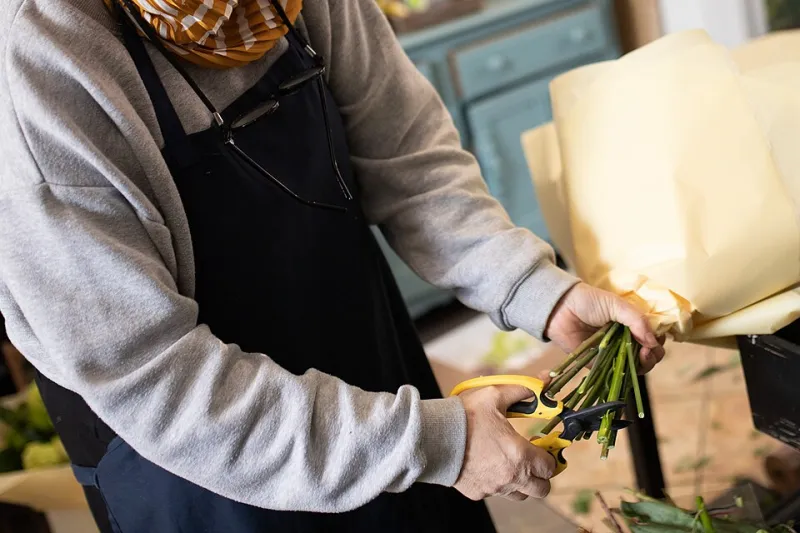
Photo: direct2Florist, CC BY 2.0, via Wikimedia Commons
There's a particular kind of buyer you see at the auction screens who barely looks at the price until the clock is already moving. They read the lot. They read it again. Then they bid, usually calmly, and usually get what they came for.
And there's the other kind, who watches the number drop, feels the lurch, and buys a box of flowers they know almost nothing about.
Our contention is simple: the second buyer is not unlucky. They're underinformed. And in a market where two lots of the same variety can sit a grade, three centimetres and four days of transit apart, the document is the product.
The price is the second thing you read
We're not going to pretend price doesn't matter — it's half the job. But price is a conclusion, not a starting point. A number only tells you something once you know what it's attached to: which grower, which grade, which stem length, which cut stage, which batch.
Read a lot line out of order and you'll misjudge it every time. Read it in order — origin, grower, variety, spec, condition, pack, then price — and the number suddenly has a context you can argue with.
What grower notes actually contain, and why each line earns its place
Good listings are dense. Every line is doing work.
Variety and breeder code. Not just 'red rose'. A named variety tells you petal count, opening behaviour and vase life expectations. A breeder code tells you whether you're looking at a garden-style, a classic or a novelty, which is a completely different proposition for event work.
Cut stage. 'Tight', 'soft', 'ready'. This is the single most useful phrase on the page for anyone working to a date. Tight is a gift for a weekend event and a liability for a same-day installation.
Stem length and weight per bunch. Length is stated far more often than weight, and weight is the better predictor of how a bunch performs in a bucket. If a listing names both, treasure it.
Grade and sorting comments. 'A1', 'A2', 'mixed lengths'. A grade is a promise about consistency, not about beauty — and consistency is what your client photographs.
Treatment and sleeving. Pre-treated, STS, sleeved or not. This tells you how much of your own conditioning time the grower has already spent for you.
Origin, farm and batch number. Useful for two reasons: traceability if something goes wrong, and pattern recognition if you buy the same farm repeatedly. Your buying log should be built on this line more than any other.
Condition comments. 'Slight bruising on outer petals' is not a scandal — it's a disclosure. What you're looking for is the listing that offers no condition comment at all on a batch that's been sitting.
Photos: what they show, and what they're designed to hide
Lot photos have improved enormously, and that's mostly good. But treat them as evidence, not as truth.
A single-bunch hero shot on a clean background tells you colour and form. It tells you almost nothing about the box behind it. Look for wide shots showing multiple bunches, a scale reference, and any background detail that reveals how the flowers are actually packed.
Watch for colour cast. A cool, blue-shifted image flatters whites and creams; a warm shift flatters reds and oranges. If every photo from a grower looks identical in tone, you're looking at a template, not a batch.
And check whether the same photo is being recycled across several lots. Reused imagery on a fresh lot number is worth a second question.
The red flags we'd walk away from
- No stated grade on a large lot. If it's a bargain, ask what's been left out of the description.
- Vague pack sizes. 'Approx' quantities on a big order is how budgets quietly slip.
- No stem length. You cannot plan an arrangement without it.
- Condition comments that read like an excuse. 'Good for its age' is not a specification.
- A very sharp discount on a single lot, day before close. Sometimes that's genuine surplus. Sometimes it's a batch the regulars have already declined.
- A grower you've never seen, with no origin beyond a country name. Not disqualifying — but buy small the first time.
Shortcuts that make daily reading fast
Document reading sounds slow until you build the habit, and then it's the fastest thing you do all morning.
Keep a running log of growers you've bought from: what the notes said, what arrived, whether it matched. Two or three cycles in, you'll be reading certain names with confidence rather than caution. Save searches that include spec filters rather than just variety, so your shortlist arrives pre-screened. And when you're weighing a big lot, pull the same variety from two other growers side by side — comparison is far quicker than evaluation from scratch.
Documents first, price second
Here's the opinion, plainly. Auction buying rewards preparation and punishes improvisation, and the improvisation usually starts the moment someone skips the notes and goes straight to the number.
The clock is loud. It's designed to be. But everything that decides whether Friday goes well is written in the quiet text above it — grower, grade, length, stage, condition. Read that first and the price becomes a decision you make, rather than a decision made for you.
Read the notes. Then the photo. Then the price. In that order, every time.